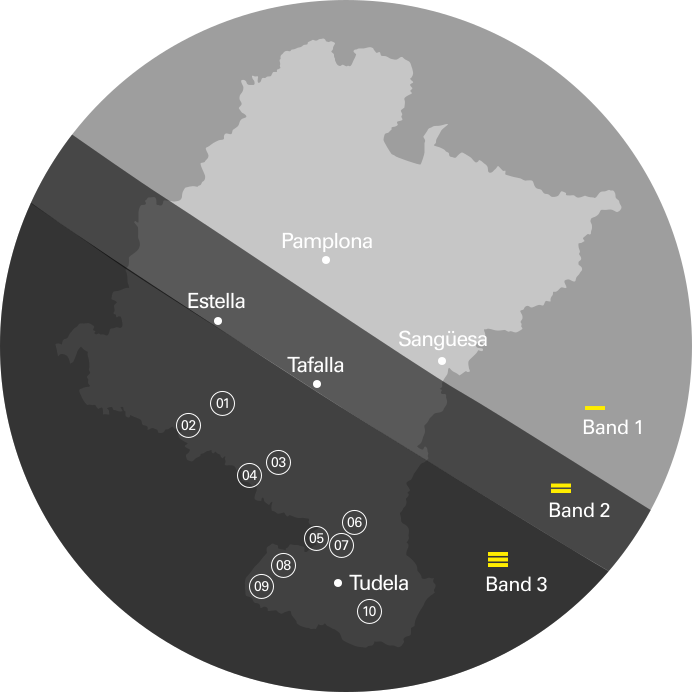
Latitude
42º28´59´´
Estimated seconds of eclipse visibility
64´´
Latitude
42º25´22´´
Estimated seconds of eclipse visibility
72´´
Latitude
42º20´18´´
Estimated seconds of eclipse visibility
68´´
Latitude
42º18´35´´
Estimated seconds of eclipse visibility
74´´
Latitude
42º10´09´´
Estimated seconds of eclipse visibility
76´´
Latitude
42º11´32´´
Estimated seconds of eclipse visibility
73´´
Latitude
42º10´39´´
Estimated seconds of eclipse visibility
73´´
Latitude
42º06´54´´
Estimated seconds of eclipse visibility
82´´
Latitude
42º03´28´´
Estimated seconds of eclipse visibility
86´´
Latitude
41º59´31´´
Estimated seconds of eclipse visibility
81´´

– Navarre –
The Government of Navarre, together with local authorities, is working to create a network of associated venues ready to host one of the most popular events of the year, as well as cultural, educational and outreach activities aimed at informing, educating and ensuring the safe enjoyment of a unique event.

Navarre’s nature park will be throwing itself into the celebration of this unique event, making all its infrastructure and facilities available to attendees, as well as offering a full programme of activities that will be revealed over the coming months.
www.sendaviva.comTalks, lectures and workshops with experts who will reveal other “universes” parallel to the astronomical event. From a different, deep and entertaining perspective, we will come away “knowing more” about these phenomena, which have amazed humanity since the immemorial.
On 29 April, we will be able to look at the exact point where the Sun will be on the day of the eclipse. Would you like to capture your unique view of this point in the sky in a photograph?
The second conversation in the series will broaden perspectives on the eclipse through art and science, understanding it not only as an astronomical phenomenon but also as a cultural event. At the Muralla Hall, Baluarte.
In the 2025-2026 academic year, the School of Stars educational programme will feature EKLIPSE as the core element of its educational and training proposals. Adapted to the school curricula of each educational cycle, they will also be enriched with new elements and infrastructures specially designed to transport students into the depths of the astronomical phenomenon par excellence.
Are you an educational centre and want to be part of it? Download the School of Stars 20025-26 Teacher’s Guide